sv
en
Menu
Contact us

sv
en

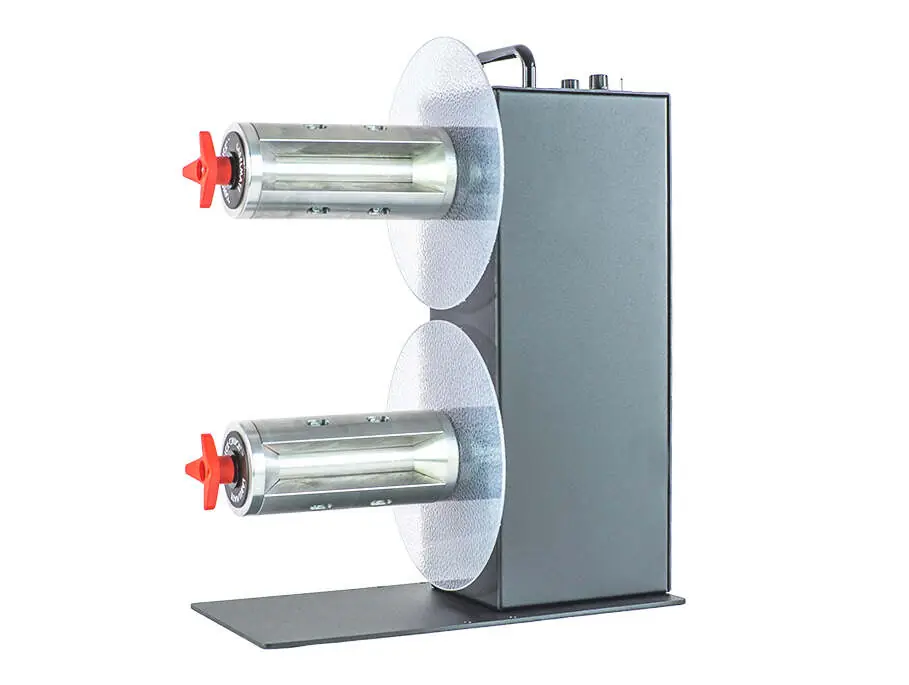
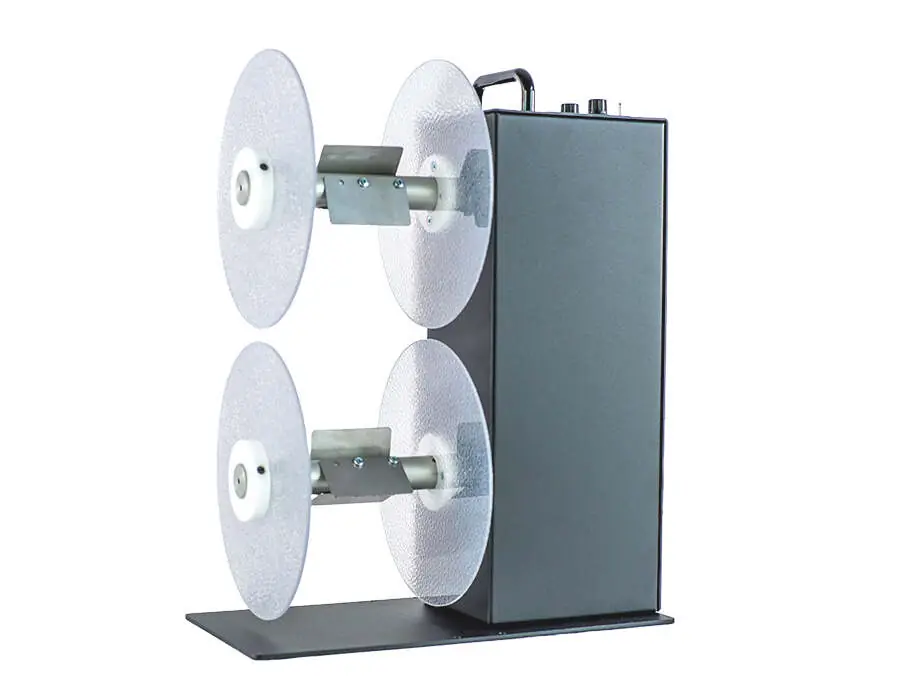
A rewinder makes it possible to customize label rolls as needed – change core size, make smaller rolls, reverse print direction or simply check and quality assure labels before they go into production. With two motors and your choice of core holder, you get maximum flexibility to set up the operation you need. Both spindles can wind forward or reverse and are controlled (direction and torque) independently of each other.

| Maximum speed at the start of a roll with a 76 mm core | Up to 1250mm/sec. |
| Supported core sizes | Standard cores: 38, 40, 44, 70, 76, or 100 mm; also adjustable core holder (25–101 mm) in some models (ACH) |
| Maximum label width | Depending on core and shaft model: 155 mm for standard cores, 255 mm for “10-inch” shaft versions. |
| Approximate weight of the machine | Between 13,2 kg or 21 kg depending on model and configuration |
| Additional dimensions (WxDxH) | 180 × 370 × 470 mm for the basic model |
You can change core size so that the rolls fit different label printers or application machines.
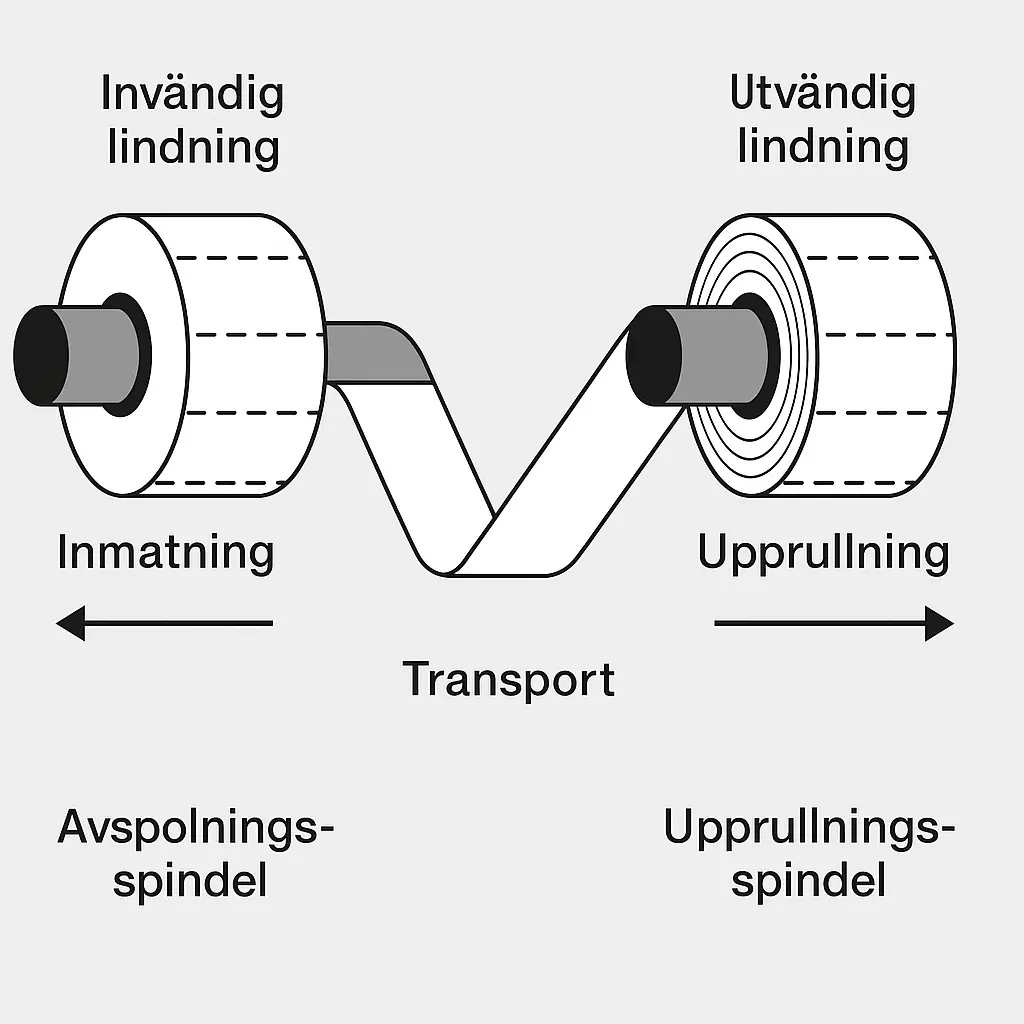
Opportunity to choose internal or external winding so that the labels feed in the correct direction.
Opportunity to inspect labels during rewinding and remove defective labels before use.
Ensures even tension and a neatly rolled up roll that is easier to use in the next step.
You can divide large rolls to smaller for short production runs.
Reduces the risk of downtime by always having rolls in the correct format ready.
With a counter you can flush a exact amount of labels per roll – perfect for orders where each customer should have a certain quantity.
The operator can prepare rolls in advance and keep the machines running without long stops.
Simplifies handling and reduces manual work.

A label rewinder is a machine that rewinds rolls of labels. It is used to change core size or winding direction (inside/outside), split large rolls into smaller rolls, inspect and remove defective labels, and rewind an accurate amount of labels per roll.
In short, it makes the label rolls ready for printing, marking or application machines – in the right format and quality.
A label rewinder works by:
Feed the roll – the existing label roll is placed on a unwinding spindle.
Transporting the label tape – the material is pulled through the machine, where defects can be inspected or removed.
Rewind onto a new roll – the machine winds the labels onto a new core in the desired direction and with the correct tension.
The result is a finished roll in the correct format, core size and order, ready to be used in printers or application equipment.
Yes – in most cases you can use a label rewinder with different types of label stock, but there are a few things to keep in mind:
Usually it works for:
Paper (regular self-adhesive labels)
Synthetic labels (PP, PE, PET)
Transparent and colored labels
Pre-printed or blank rolls
Things to check before:
Material thickness and stiffness – very thin or delicate materials may require tension adjustment.
Roll core diameter and maximum width – the rewinder must support the same dimensions.
Adhesive type – labels with extremely strong adhesives can cause pulling problems.
Speed and torque – make sure the machine's motors can handle the material without stretching it.
In short: most rewinders are versatile and work for almost all standard labels, but for special materials (e.g. extremely thin films, metallized labels or sensitive thermal labels) you should check the machine specifications or do a test.
Yes, in many cases you need to adjust the speed of the rewinder – and it is an advantage to be able to do so.
Here's why:
Material protection: Too high a speed can cause labels that are too thin or delicate to stretch or tear.
Roll quality: Rewinding too quickly can result in an uneven roll or rolls that are too tightly wound and difficult to use later.
Accuracy: If you are using the counting function, lower speed is better for precision.
Matching with printers or other equipment: When used inline, the speed should match the machine's output.
Most modern rewinders (like ours) Twin CAT-2) has adjustable speed and torque, so you can optimize both tempo and tension for your particular material.
Yes, you can use a label rewinder in a continuous production flow – in fact, it is one of the most common uses.
A rewinder makes it possible to customize label rolls as needed – change core size, make smaller rolls, reverse print direction or simply check and quality assure labels before they go into production. With two motors and your choice of core holder, you get maximum flexibility to set up the operation you need. Both spindles can wind forward or reverse and are controlled (direction and torque) independently of each other.
En rewinder (Eng. rewinder) is a machine used to rewind labels or other materials supplied on a roll. It is often used in printing, production and logistics to make the rolls more useful for a particular process.
Here's how it works in brief:
Input: You place the existing roll on the machine's unwinding spindle.
Transfer: The material is pulled through the machine – often at the same time you can check labels, remove matrices (waste material) or reverse the direction.
Rewinding: The machine winds the material onto a new roll (on a new core), in the desired direction, with the desired tension and roll size.
Steering and control: Our modern rewinders have:
Direction and torque control – so you can choose internal or external winding.
Counter – to flush a precise amount of labels.
Inspection function – so that incorrect labels can be detected and removed.
Do you want to see how the machine works in your production on your material or product? Book a free Demo We will be happy to show you the machine (or similar machine) in operation and how we can tailor the solution based on your needs.
Fill out the form and we will contact you!
You can also call us directly at + 4610-444 1600.
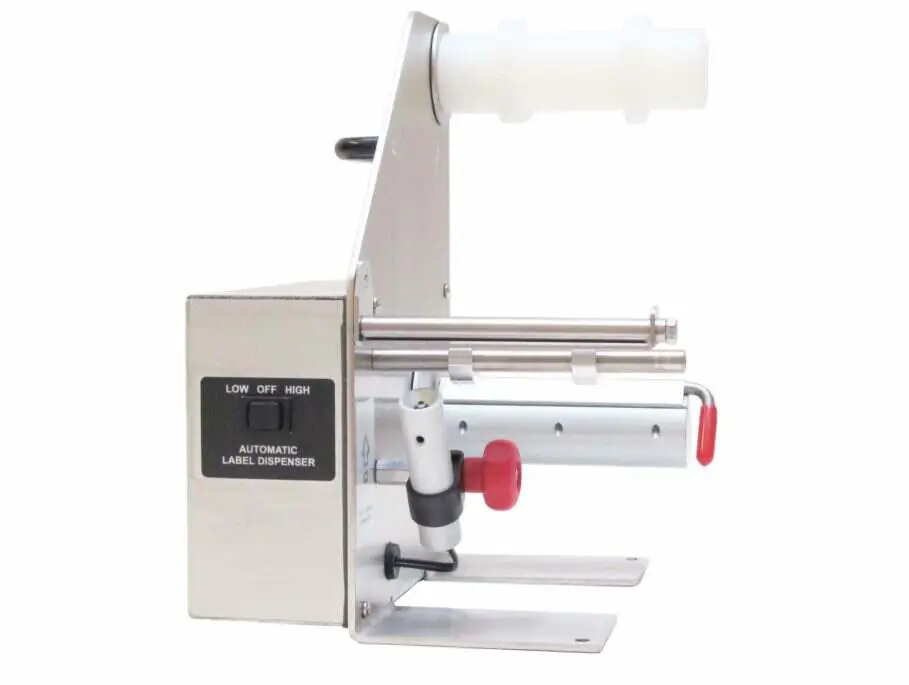
Tabletop label dispensers are practical devices that make it easy to apply labels to various surfaces and provide quick…
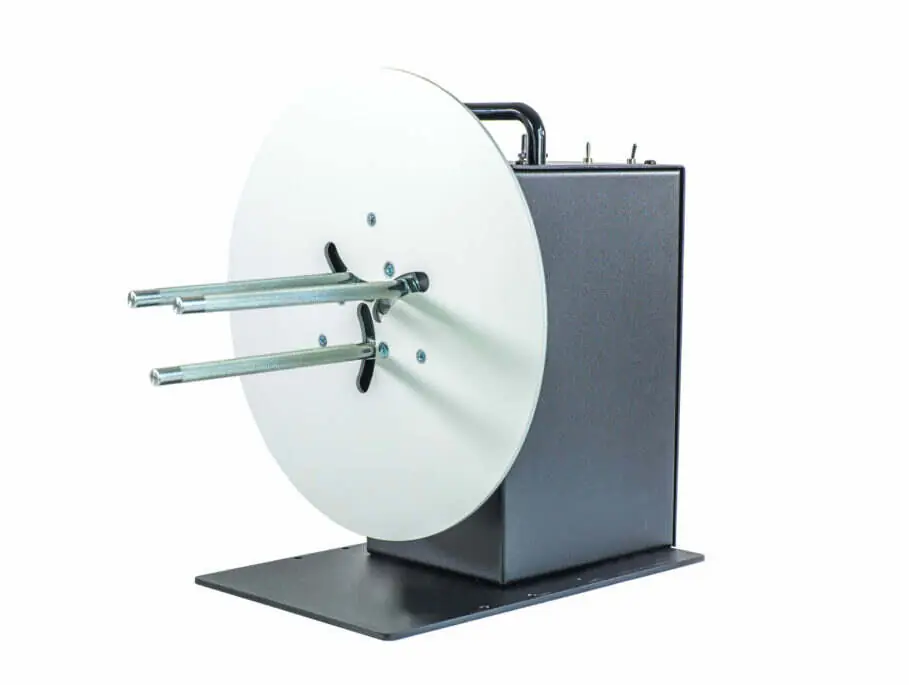
The CAT 3 ACH rewinder from Labelmate is designed to handle standard self-adhesive labels and their liners. It can…
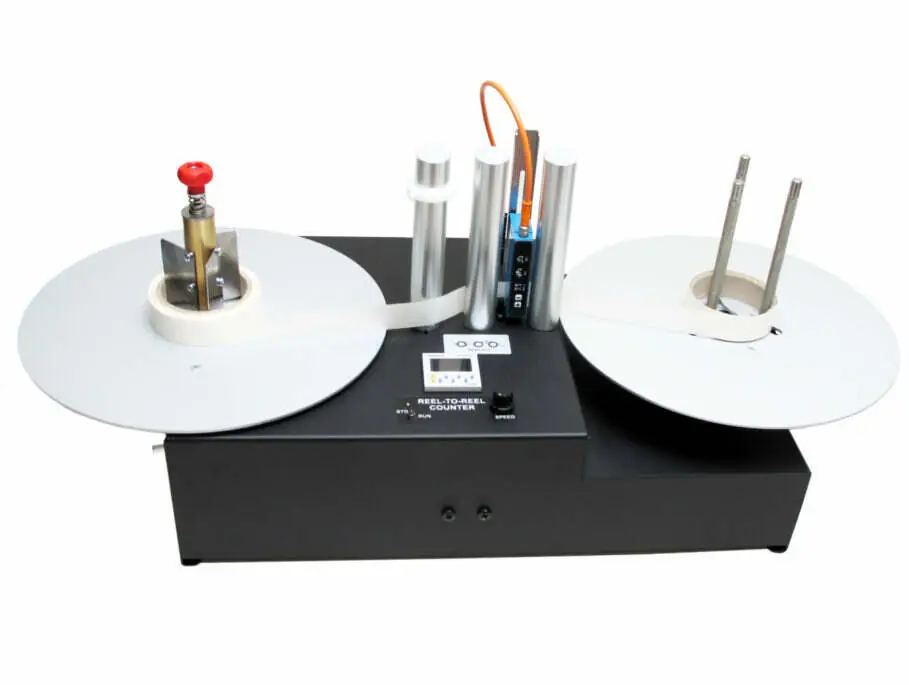
This Reel-to-Reel Counter RRC-330 from Labelmate is a machine used to measure and track the number of revolutions or…
